
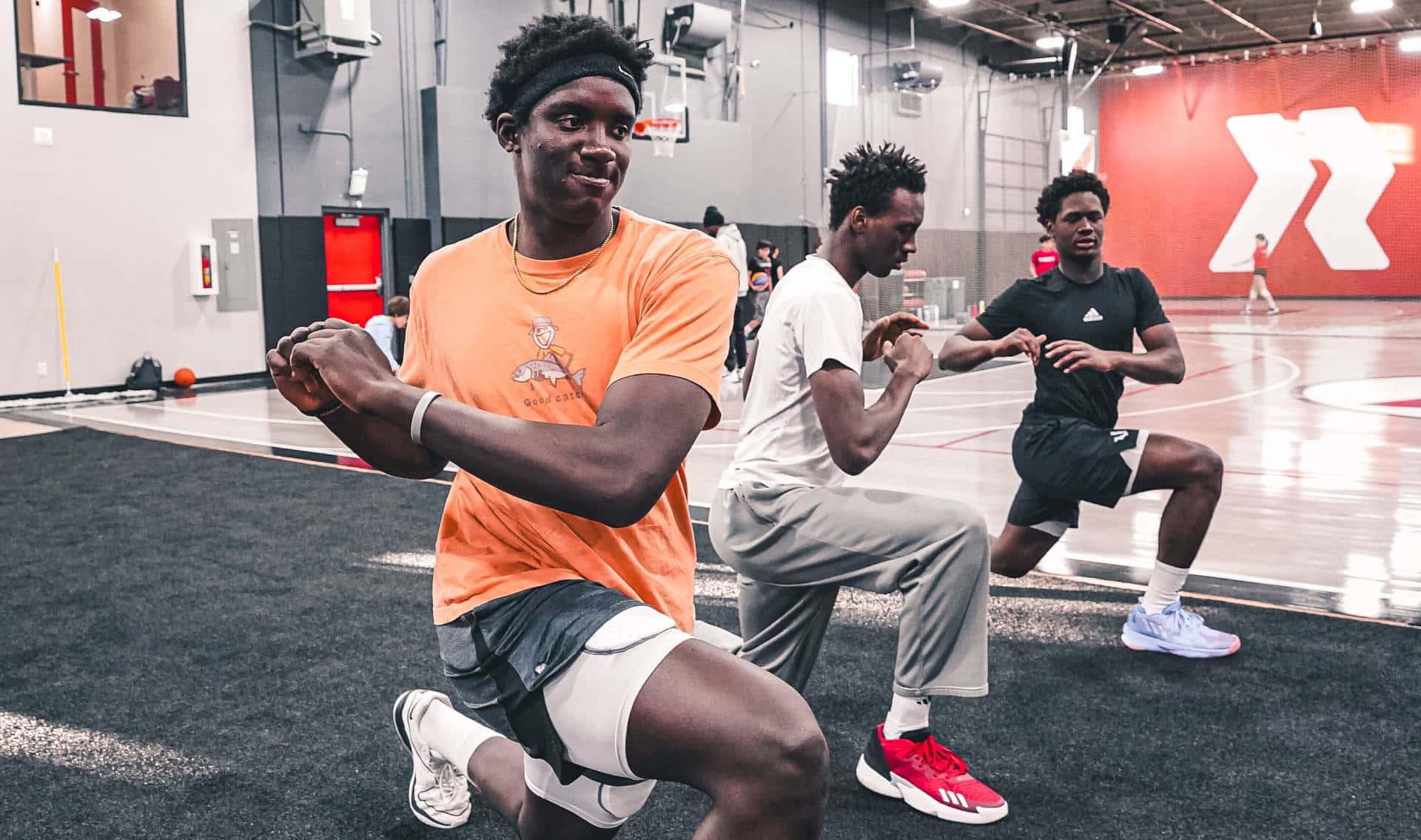
Basketball: Weight and Strength Training
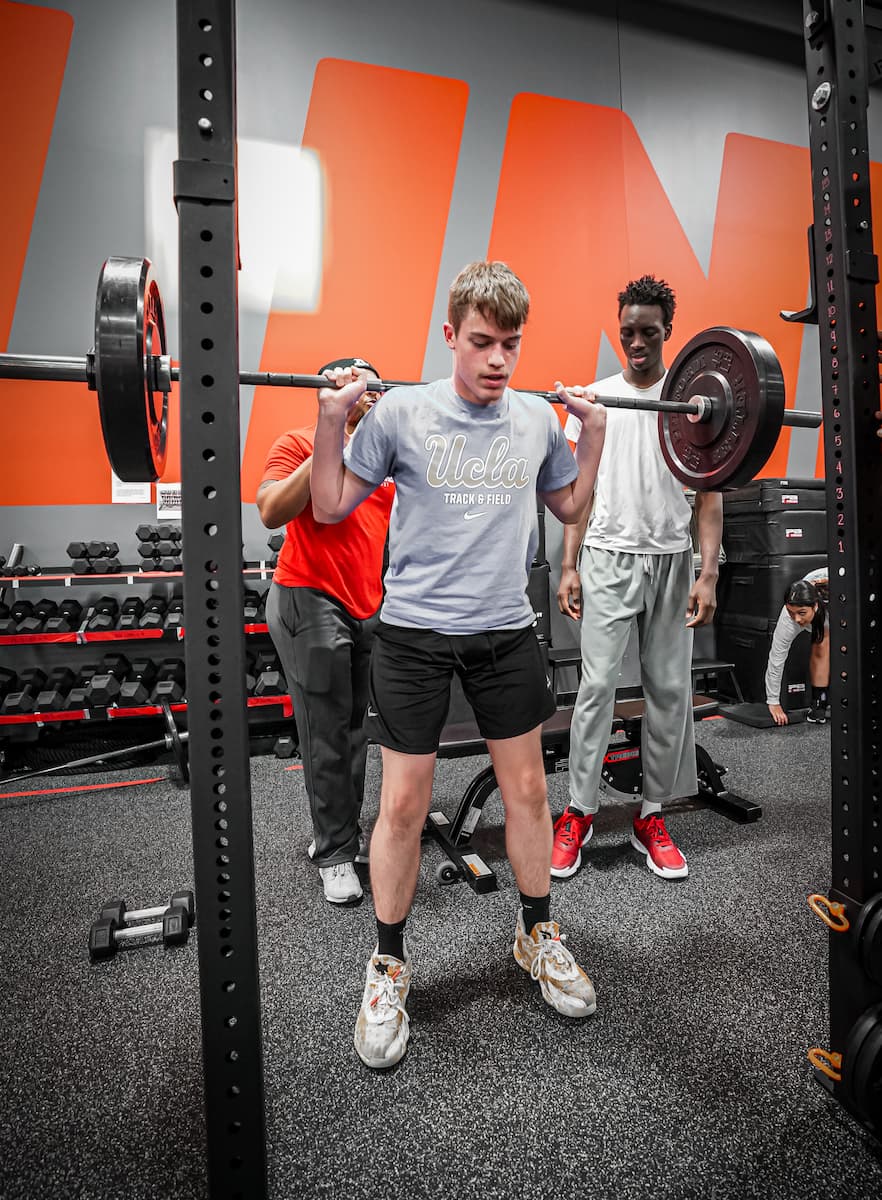
Why Strength Training is Important for Basketball Players
Strength training is a key component of athletic development in basketball, helping players become faster, stronger, and more resilient on the court. Whether it’s absorbing contact when driving to the basket, improving vertical leap for rebounds, or maintaining stamina late in games, a well-rounded strength program gives athletes a competitive edge.
At RDE Sports, we specialize in basketball-specific strength training, offering players the option to alternate between focused skill development and structured strength & conditioning sessions designed to elevate performance and reduce injury risk.
How To Find Basketball Weight Training in Denver, CO
While it’s easy to find basketball weight training videos on YouTube or social media, most young athletes struggle with consistency, proper form, or simply staying motivated when training alone. Many quickly burn out or develop bad habits without proper guidance. In Denver, there are very few programs that truly specialize in basketball-focused strength and conditioning, which makes it tough to find the right fit.
That’s why RDE Sports offers in-person training with structured schedules, hands-on coaching, and a facility built for real development. Our location, equipment, and atmosphere make it easy for athletes to show up and get better every day. When choosing a basketball weight training coach, look for experience working with hoopers, a teaching style that balances encouragement and discipline, and positive reviews from other parents or athletes who’ve seen results.
How a Basketball Weight Training Session Works at RDE Sports
Each basketball weight training session at RDE Sports starts with a smooth check-in at the front desk, where athletes are greeted and guided to the strength area. Sessions begin with a warm-up focused on mobility, core activation, and dynamic movement to prepare the body for explosive work. From there, athletes move into a structured workout built around basketball-specific movements—think lower-body power, upper-body strength, and stability for defense, shooting, and rebounding.
Trainers tailor each workout based on the athlete’s age, experience, and goals, ensuring every rep builds functional strength and athleticism. After the workout, athletes and families can easily set up recurring sessions with our staff to maintain consistency and progress week after week.
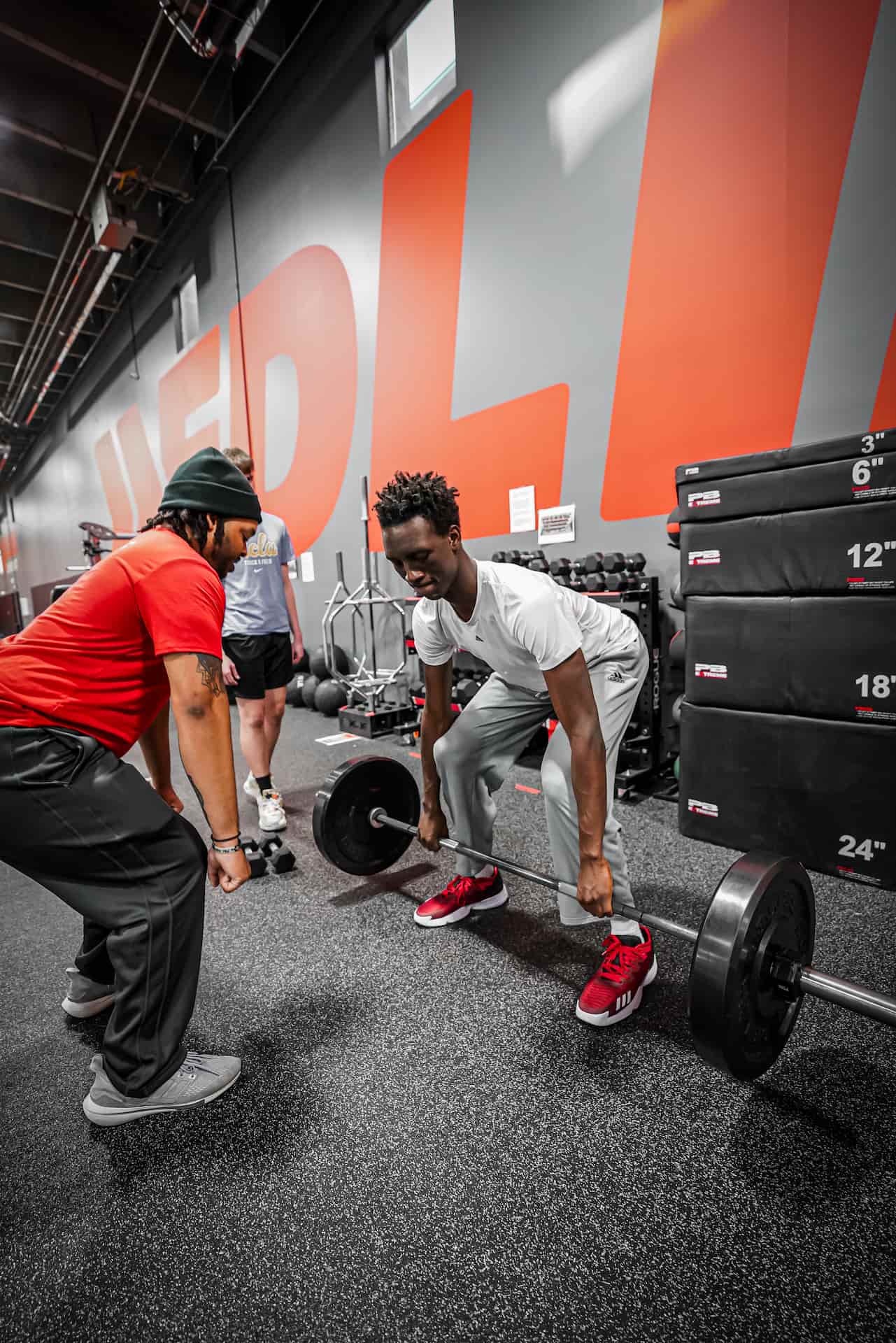
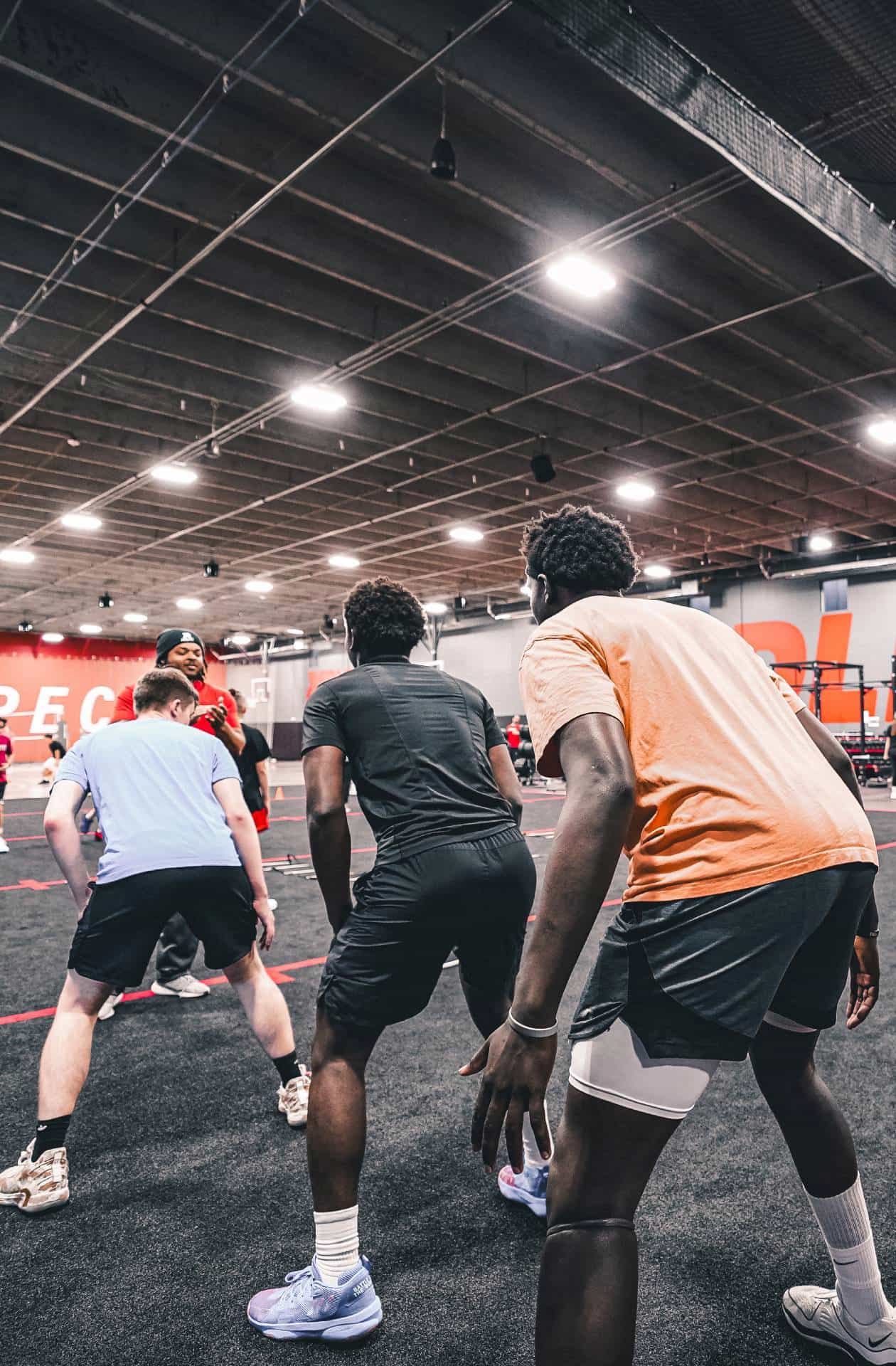
Example Strength Training Workout
A typical strength training session at RDE Sports blends performance, injury prevention, and basketball-specific movement. Here’s an example breakdown of a 60-minute workout:
Dynamic Warm-Up (10 min)
Skips, shuffles, lunges, high knees, mobility work, and activation drills to prep the body.
Power & Plyometrics (10 min)
Box jumps, medicine ball slams, or band-resisted sprints to develop explosiveness.
Strength Training Block (25 min)
Lower Body: Goblet squats, trap bar deadlifts, Bulgarian split squats. Upper Body: Dumbbell bench press, pull-ups, shoulder stability circuits. Core: Anti-rotation work, planks, weighted carries.
Basketball-Specific Conditioning (10 min)
Lateral slide drills, cone sprints, or sled pushes designed to simulate game movement.
Cool Down & Mobility (5 min)
Light stretching and breath-work to support recovery.
Frequently Asked Questions
At what age should players start strength training for basketball?
We recommend athletes ages 12 and up begin strength training with a basketball focus. At younger ages, we keep it basic and focus on body weight movements, which can help build core strength and tailor them for more extensive workouts later on. High school athletes are at a prime age to start with more advanced movements and real weight, allowing them to build muscle and grow their strength in a major way.
Do I need to be experienced to start a strength training program?
No! No matter the experience level, our coaches can help build a program that best fits your athlete’s needs and their experience. Whether it’s super basic for a beginner, and a seasoned athlete ready to take their strength to the next level.
How often should basketball players lift weights?
To see the most effective results, we recommend an athlete serious about growth to train at least 2x/week.
Should I lift before or after basketball practice?
It depends on the athlete’s goals, schedule, and the intensity of each session. In general, if the main focus is improving basketball skills, it’s best to lift after practice so skill work gets the most energy and focus. If the goal is to build strength or muscle, lifting before a light practice may be better. At RDE Sports, we help athletes structure their training week to balance both – maximizing performance and recovery.
How do I know what weights to start with?
It will depend on age and experience. Our coaches will help determine the best place to start, whether its fundamental body weight training, or advanced movements.
How important is rest and recovery? Is it okay to train on consecutive days?
Recovery is a huge aspect of seeing real, consistent growth. This includes eating properly, getting enough sleep, staying hydrated, and allowing recovery. It is totally okay to train on consecutive days, as long as recovery is also prioritized.
Should weight training be adjusted during my season?
Yes, an athlete’s training regime should be adjusted for when they’re in season. Although, it is totally fine and encouraged to continue strength training! Continuing to train will ensure constant improvement and help the athlete maintain their strength.